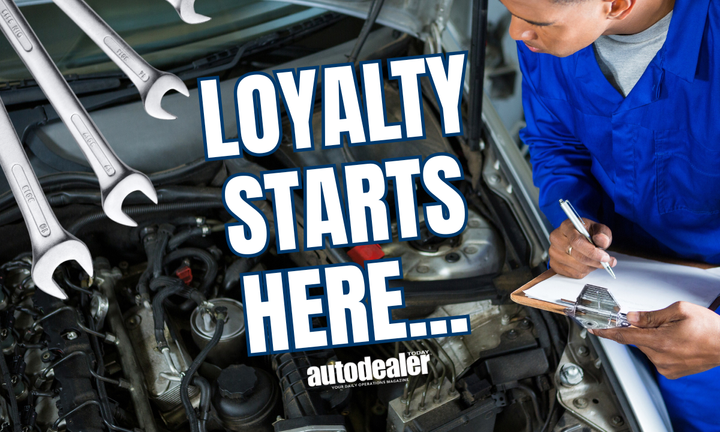
There is a long-standing truth in automotive retail that continues to define long-term success: While the sales department may deliver a customer’s first vehicle, it is the service department that earns his or her long-term loyalty.
Despite decades of change in vehicles, technology, and consumer expectations, this principle remains unchanged. Owner retention is not built in the showroom alone — it is earned in the service drive through consistent, professional interactions that build trust and keep customers coming back.
Today’s dealers operate in a highly competitive and increasingly complex environment. Margins are tighter, customer loyalty is harder to gain, and vehicle ownership cycles are longer. As new-vehicle sales start to decline, retaining customers is no longer a “nice to have.” It is essential for long-term profitability.
The good news is that dealers have more tools than ever to support retention—business development centers, appointment coordinators, digital marketing, artificial intelligence-driven communication tools, kiosks, and automated follow-up systems, to name a few.
Yet even with these advancements, technology alone is not the solution. At its core, owner retention still depends on well-trained service advisers executing consistent, customer-focused processes. Tools support the mission, but people deliver the experience.
Service advisers are the primary point of contact between the customer and the service department, and often the source of the most frequent human interaction a customer has with the brand.
Credit: Auto Dealer Today
The Adviser’s Role in Retention
Service advisers occupy a unique and influential position in the dealership. They are the primary point of contact between the customer and the service department and often the source of the customer’s most frequent human interaction with the brand.
Their ability to build trust, educate customers, and communicate value directly impacts whether a customer returns or defects to an independent shop or another dealer.
To consistently drive retention, advisers must master four foundational processes:
Effective Communication: Advisers must communicate clearly and professionally in every interaction: on the phone, in person, and in writing. Customers want to feel heard, respected, and confident in the information they receive. When communication breaks down, trust erodes, and retention suffers.
Customer Education on Preventive Maintenance: Automaker-recommended maintenance is not just about protecting the vehicle — it’s about protecting the customer. Advisers who proactively educate customers on preventive maintenance help them avoid unexpected repairs, extend vehicle life, and feel more confident in their ownership experience.
Reviewing Multipoint Inspections: Every customer deserves a clear understanding of their vehicle’s safety and condition. Reviewing multipoint inspection results reinforces transparency, demonstrates professionalism, and positions the adviser as a trusted consultant rather than a salesperson.
Explaining the Three Cs: Concern, Cause, and Correction: Customers don’t just want to know what needs to be fixed; they want to understand why. Clearly explaining the concern, the cause, and the correction builds confidence and increases repair authorization while reducing misunderstandings.
Training Is Not Optional
Of these four processes, effective communication is the foundation. Without it, the remaining processes fail. This is why training must be ongoing, not episodic. Initial onboarding is important, but true professionalism is built through continuous development.
Continuous adviser training leads to stronger customer relationships, more consistent service experiences, and measurable gains in retention and profitability.
A Customer-Centered Mission
At the heart of service excellence is a simple mission: ensuring every customer leaves the dealership driving a safe and reliable vehicle. When advisers align around this purpose, selling becomes secondary to serving. Customers recognize this difference, and loyalty follows.
Owner retention may not be a new concept, but in today’s marketplace, it has never been more important. The dealers who win tomorrow will be those who invest today—in their people, their processes, and their commitment to the customer experience.
Credit: DealerPRO Training, Driven by EasyCare
About the Author: Don Reed is the founder of DealerPRO Training, Driven by EasyCare.
Editor’s note: This article was authored and edited according to Auto Dealer Today editorial standards and style. Opinions expressed may not reflect that of the publication.
We use cookies to ensure that we give you the best experience on our website. If you continue to use this site we will assume that you are happy with it.