

Software-driven mobility
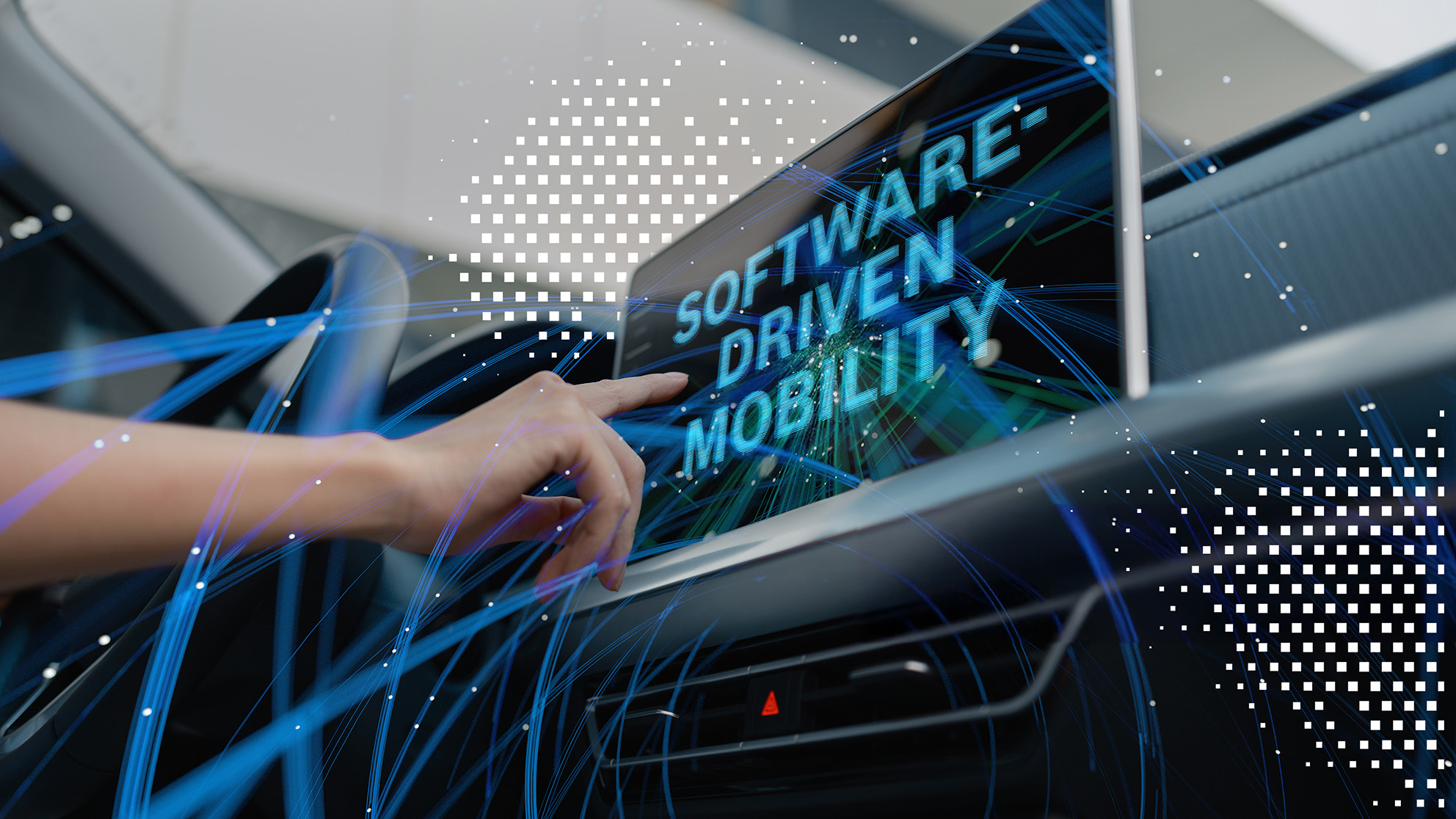
For a long time, driving was a mechanical process: a vehicle with an engine, a steering wheel, and four wheels. Even though much of what we see on the outside has remained familiar, the foundation of driving has changed. New exterior sensors and increasingly intelligent systems inside the vehicle have transformed how mobility works. Sensors now capture everything happening around and within the car. Software interprets this information and supports drivers in situations where humans once had to react on their own. Capabilities that once came purely from mechanical components now originate from code — and that code continuously evolves.
This shift creates a new understanding of mobility. A vehicle that detects situations, learns from experience, and becomes more intelligent with every update. A system that redefines safety, enhances comfort, and adapts to people rather than the other way around. Often invisible, yet unmistakably noticeable.
Bosch operates precisely in this layer — the layer that connects the physical and digital worlds. It integrates data from exterior sensors and cameras with information from chassis systems, powertrain, and driver assistance functions inside the vehicle. Bosch software brings all these signals together, transforming a technical object into a learning, connected system.
Bosch technologies form the digital nervous system of modern vehicles and shape a future in which mobility is more connected, more efficient, and more personal than ever before.