

How EVs and hydrogen cars compare in the shift to clean transport
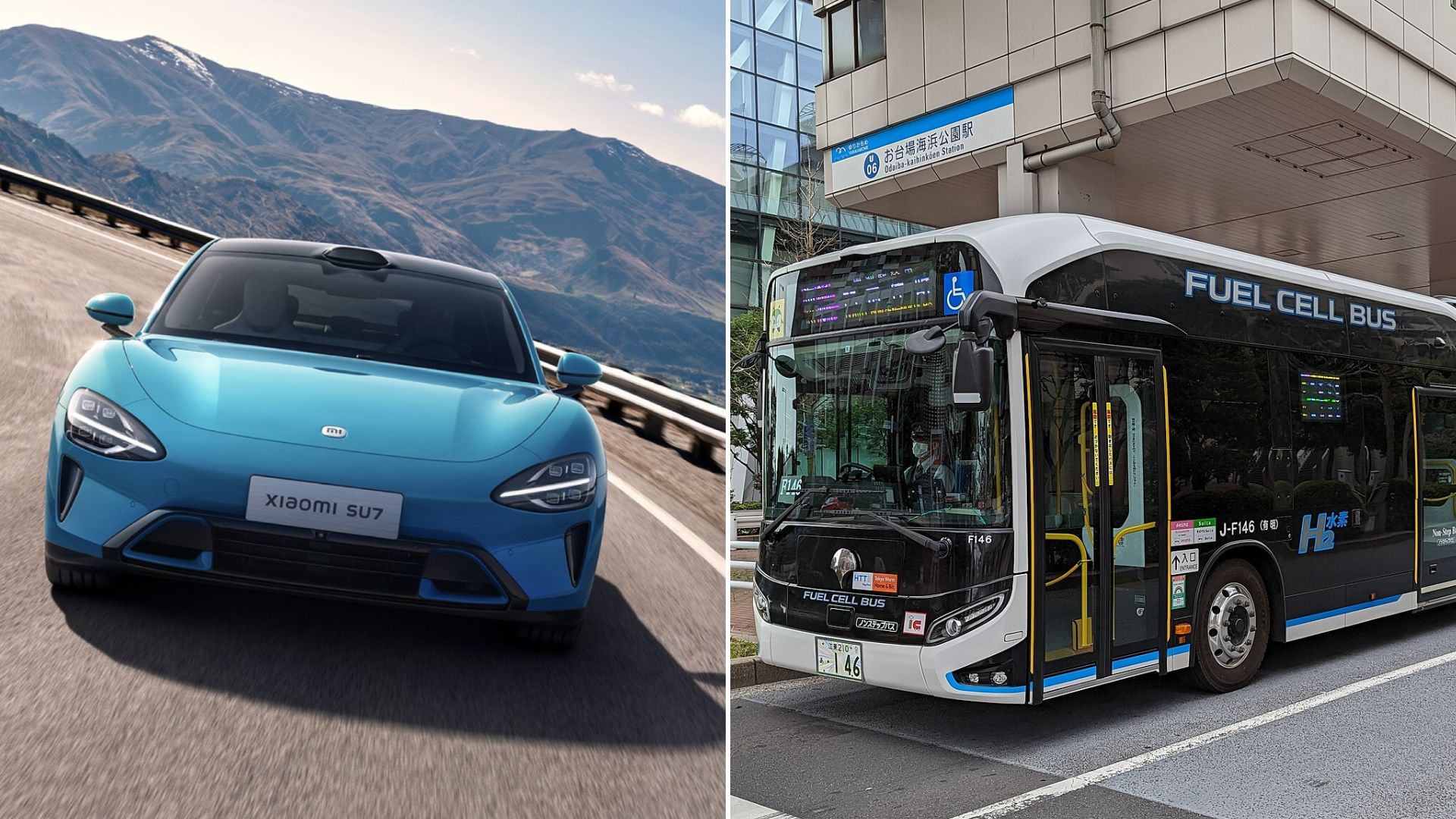
The debate between battery-electric vehicles (EVs) and hydrogen fuel-cell vehicles (FCEVs) often sounds like a tech rivalry where only one can win. In reality, both are electric drivetrains trying to solve the same problem. How to move people with far fewer emissions than petrol and diesel, but they take very different routes to get there.
At the same time, both technologies aren’t merely alternatives. They represent different infrastructures, investment paths, and assumptions about how society will generate, distribute, and store clean energy in the decades ahead. Whether one prevails or both find their place will depend not only on engineering but on economics, policy choices, and how rapidly the world can build the systems each technology requires.
How battery-electric cars work
Battery-electric cars store energy as electricity in a large battery pack. You charge that battery from the grid (or from rooftop solar), and an electric motor turns that stored energy into motion.
Technically, this is a very short chain. Electricity to battery to motor to wheels. Because there are relatively few conversion steps, modern EVs can turn roughly 70-90% of the electricity from the battery into motion on the road, with the rest lost as heat and other inefficiencies.
This simplicity is why EVs feel so responsive. High efficiency, few moving parts, and instant torque. It is also why charging infrastructure can piggyback on something we already have everywhere. The electricity grid.
How hydrogen fuel-cell cars work
Hydrogen cars are also electric, but they carry their energy as compressed hydrogen gas. Inside the vehicle. A fuel cell combines hydrogen with oxygen from the air to produce electricity, which then drives an electric motor. The only tailpipe output is water vapour.
The challenge is everything that must happen before hydrogen reaches the car. If you start with renewable electricity, you must first split water into hydrogen and oxygen via electrolysis, compress or liquefy the hydrogen, transport and store it, then convert it back into electricity in the fuel cell. Each step wastes some energy.
Studies that track this full “electricity-to-wheel” chain typically find that hydrogen fuel-cell cars use about two to three times more energy per kilometre than battery-electric cars, ending up with an overall efficiency somewhere in the 25-45% range. So hydrogen cars offer zero tailpipe emissions like EVs, but with a more complex energy pathway.
Climate impact: it’s not just the tailpipe
Both EVs and hydrogen cars look clean from the exhaust pipe, yet the real climate story is in how their energy is produced and how the vehicles are built. Lifecycle analyses consistently show that battery-electric cars emit much less greenhouse gas over their lifetime than petrol cars. Recent research in Europe estimates that emissions are around 70–75% lower, even on today’s imperfect grid.
When hydrogen cars are added to the comparison, battery EVs generally come out ahead again, primarily because they use energy more efficiently and can plug directly into a grid that is slowly decarbonizing.
Hydrogen cars can match or beat EVs in lifecycle emissions, but only under strict conditions. The hydrogen must be “green,” produced from renewable electricity rather than from natural gas (which still dominates hydrogen production today).
With green hydrogen, fuel-cell vehicles can approach the low emissions of battery-electric cars. With fossil-based hydrogen, their climate advantage shrinks drastically, sometimes barely improving on conventional engines.
Infrastructure, cost, and convenience
This is where reality kicks in. EV charging infrastructure has scaled rapidly. Globally, more than 1.3 million public charging points were added in 2024 alone, and countries such as the UK now have tens of thousands of public chargers. Fast-charging networks along highways are expanding, and many drivers charge at home or work, which is impossible with petrol or hydrogen.
Hydrogen refuelling, by contrast, is still rare. Even in advanced markets, hydrogen stations are counted in the dozens or hundreds, not the tens of thousands. The UK, for example, has tens of thousands of EV charging locations but only a few public hydrogen stations. Globally, clusters exist in places like Japan, South Korea, Germany, and parts of China, but coverage is patchy. Building each hydrogen station is also capital-intensive and technically demanding.
On costs, battery-electric cars benefit from mass-produced lithium-ion batteries, falling prices, and simple drivetrains. Fuel-cell systems and hydrogen storage tanks remain expensive, and green hydrogen itself is generally pricier per kilometre than grid electricity, especially once you factor in their lower efficiency.
Hydrogen’s main convenience advantage is refuelling time. Filling a tank in 3-5 minutes feels much closer to petrol, whereas even fast DC charging usually takes 20-30 minutes to get a substantial charge. For drivers who make frequent long-distance trips, that difference matters.
Where hydrogen might still shine
If battery EVs look like the clear winner for daily passenger cars, why are so many engineers and policymakers still interested in hydrogen? One reason is that not all vehicles are small cars doing short trips.
Hydrogen is becoming more attractive for heavy trucks, long-distance buses, and possibly ships and trains. These are situations where you need long-range, quick refuelling, and where carrying a very large, very heavy battery is a problem. In these niches, the higher energy density of hydrogen and the ability to refuel quickly can outweigh the efficiency penalty.
Hydrogen is also being explored as a way to store seasonal surplus renewable electricity and as a feedstock for industries like steel and fertilizers, which could create a broader “hydrogen economy” that transport can tap into. In that world, fuel-cell vehicles might depend on an infrastructure built primarily for trucks, industry, and shipping rather than for private cars.
So which technology wins?
If the question is “What will most people drive in the next couple of decades?”, the physics and economics both point strongly toward battery-electric cars. They are far more energy-efficient, easier to power from an increasingly renewable grid, cheaper to run, and supported by infrastructure that is already scaling worldwide.
Hydrogen cars are less likely to dominate the family driveway, but that does not make them irrelevant. Their advantages, rapid refuelling, higher energy storage per kilogram, and compatibility with emerging hydrogen supply chains, position them well for sectors that demand long range and operate under heavy loads.
Rather than framing the debate as hydrogen versus batteries in an all-or-nothing battle, it is more accurate to see them as complementary tools. For everyday passenger cars, the battery-electric roadmap already looks promising. For the really tough parts of transport, moving heavy things very far, very quickly, hydrogen may still earn a significant, if more specialised, place in the clean-mobility future.