

Why electric two wheelers are the backbone of India’s clean mobility future – The Times of India
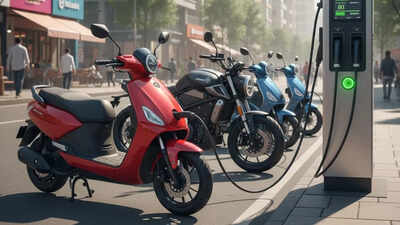
This article is authored by Kunal Arya, Co-founder & MD, Zelio E-Mobility.India’s clean mobility story often focuses on electric cars, mega charging corridors and billion dollar battery factories, but that picture misses how people actually move every day. The reality on India’s roads is that the two wheeler is the workhorse, not the car. This segment already makes up more than 70% of all registered vehicles and accounts for over 50% of petrol transactions. If cutting emissions matters, the obvious starting point is not premium electric cars. The logical place to begin is the vehicle that reaches the most people. Electric two wheelers are therefore not a supporting act in India’s EV transition. They are the main act.The market is proving this shift. In 2025, India recorded over 2.02 million electric vehicle registrations, edging past the 1.95 million registered in 2024. Electric two wheelers played a leading role in this growth, contributing nearly 1.2 million vehicles and surpassing their own total of 1.15 million from the previous year. This change is not driven by slogans or ideology. It is driven by daily economics and the practical realities of Indian streets.
Urban Reality
Indian streets work best for vehicles that are small, simple to ride and light on the wallet. That is why two wheelers have ruled daily travel for so long. They move through traffic with ease, slip into narrow parking spaces and suit the short trips most people make every day. Most city journeys fit well within the range of electric models, and charging at home or at work makes long queues at public chargers unnecessary. Electrification also helps ease everyday urban problems like noise and polluted air. The idea that electric mobility will mainly come through large cars ignores how Indian streets really function. Two wheelers already play several roles as personal transport, shared rides and first and last mile links. Moving this layer of mobility to electric delivers faster and broader results than waiting for car electrification to reach scale.
Cost Logic
Affordability determines winners in India and this is where electric two wheelers quietly outcompete petrol models. Petrol prices have risen by about 60% over the last 5 years, which has pushed up the total cost of ownership for internal combustion two wheelers. Electricity still costs far less per kilometre than petrol or diesel. For people who ride daily, those savings add up quickly. Studies indicate the total cost of ownership for an electric two-wheeler can be 20% to 70% lower than an equivalent petrol model depending on usage. That difference matters where two-wheelers are household workhorses rather than fashion statements. Electric models have stopped being premium novelties and are becoming sensible financial choices for students, gig workers and families.
Delivery Economy
The boom in doorstep delivery has rewritten transport needs across India’s towns and cities. Food, groceries and parcels now largely move on two wheeler fleets rather than in trucks. The pandemic accelerated that shift and it has not reversed. For fleet operators, electric two wheelers offer steadier operating costs, lower maintenance and protection from fuel price volatility. Logistics companies are choosing them for financial sense rather than branding appeal. Two wheelers also perform better in dense neighbourhoods where vans struggle with access and parking. Trials with bike taxis and shared trip models further show how electric two wheelers can extend public transport through flexible first and last mile links. Clean mobility in India will not be built only on individual ownership. It will be built on millions of commercial kilometres travelled every day.
Market Proof
Earlier scepticism about electric two wheelers focused on durability and quality, but that era is passing. Sales penetration is projected to cross 80% by 2030 and market momentum already points in that direction. Legacy manufacturers who once dominated petrol bikes are now moving aggressively into the electric segment. That matters because these firms bring supply chains, service networks and financing depth to the ecosystem. When established brands put capital and reputation behind electric two wheelers, the shift becomes less experimental and more inevitable. The 2025 numbers make this clear. Electric two wheelers did more than grow. They broke past previous records and became the backbone of overall EV adoption.
Supporting the Shift
India’s clean mobility initiative complements its climate change plans. At the COP26 summit, the government committed to reducing projected carbon emissions by one billion tonnes by 2030, a target that cannot be achieved without electrifying mass mobility segments. Electric two wheelers play a disproportionate role here, given their dominance in vehicle numbers and petrol consumption. That is why policy has targeted them. FAME II, EMPS and the PM E DRIVE initiative have all offered support that benefits electric two wheelers, while the Union Budget 2026 reinforced the push with measures for battery manufacturing, energy storage and rare earth processing.To conclude, what really sets electric two wheelers apart is how effortlessly they fit into everyday life in India. They reduce emissions where traffic is heaviest, save money where household budgets are tight, and scale where their impact matters most. Their growing acceptance in Tier 2 and Tier 3 cities shows that this shift is no longer limited to big metros but is spreading to smaller towns where mobility needs are just as real and costs matter even more. India’s clean mobility future will therefore not be driven by a parade of luxury electric cars. Instead, it will be powered quietly and efficiently through the everyday choices of millions of people on city streets and smaller town roads alike, moving decisively on two electric wheels.Disclaimer: Views and opinions expressed in this article are solely those of the original author and do not represent any of The Times Group or its employees.