

Scenes From CES 2026
While most people were spending the first week of January implementing their New Year’s resolutions, I had the pleasure of spending a week in Las Vegas at the largest trade show I’ve ever witnessed – CES.
For those who don’t know, CES (formerly the Consumer Electronics Show) takes place every January in Vegas and brings together everything from LG’s newest 8K TVs to consumer drones to wearable tech and, of course, automotive and automotive technology.
Here are my four biggest takeaways from CES 2026 for the automotive industry:
- Agentic artificial intelligence is the future of the in-vehicle experience.
- The connected car will increasingly become a payment device.
- Autonomy is the life support electric vehicles desperately need.
- In-vehicle entertainment experience will become highly competitive.
Agentic AI
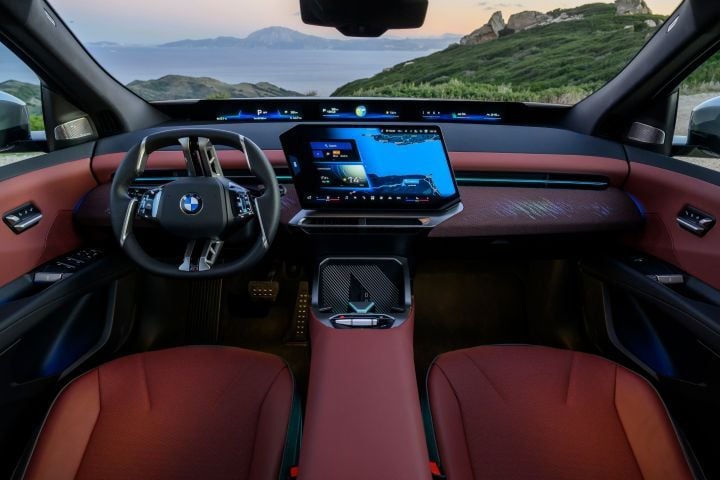
BMW was among automakers showcasing infotainment as part of their heavy investment in vehicle operating systems.
Agentic AI is the next advancement in the popular technology that will reach the mainstream. Most people have now used generative AI tools like ChatGPT, Gemini or Claude – systems that generate an answer in response to a prompt. Agentic AI goes further: It can take actions on your behalf, completing multistep tasks across multiple applications and services.
Imagine you’re driving to your next meeting. Your vehicle detects an accident ahead, recalculates your ETA, emails guests that you’ll be late, and automatically pushes back the Teams or Zoom meeting 15 minutes – all without you touching your phone.
To provide the best possible experience, these AI agents need access to as much data as possible. This is one reason OEMs are investing so heavily in their own vehicle operating systems. Mercedes-Benz was scheduled to begin shipping the new GLB and CLA to the U.S in the second quarter, its first vehicles equipped with its MB.OS proprietary operating system. According to Mercedes, all model years 2020 and newer will be able to update to the new operating system this year.
General Motors recently announced that new vehicles won’t support Apple CarPlay. In-vehicle experiences like it and Android Auto detract from the look and feel of the OEM brand and capture data for Apple and Google, not for the OEMs. That data – navigation, music, and messaging – is essential for building agentic AI and creating an experience that drives OEM loyalty. In this, we can see why the race for proprietary software and to build software-defined vehicles, or SDVs, is near the top of OEMs’ priority lists.
Connected Car as Payment Method
The connected car was a frequent topic throughout the exhibit floor and sessions at CES. The fusion of your smart home with the connected car provides all types of exciting possibilities. Picture this: You pull into your driveway. Your garage door opens. It is expected to be a cold night, so your heat turned on when your car was 45 minutes away from your house. You can see your interior lights start to brighten as your car pulls into the driveway. All this without ever touching a button or making a command.
The most interesting practical topic related to the connected car, however, was the discussion around the car as a payment method. Thanks to Tesla and its charging infrastructure, the car-as-payment-method model has been proven to be not only possible but a major convenience for consumers.
For those who don’t know, when you pull up to a Tesla charger in a Tesla vehicle, you can begin charging without swiping a credit card. This is due to your payment information being stored in your Tesla and your vehicle communicating that information through the internet-connected charger. This technology is now being replicated across other areas, such as parking and gas stations.
OEM leaders, like Hyundai with its Hyundai Pay technology and BMW with BMW In-Car, are already implementing these technologies in their vehicles, and the number of vendors and applications supporting this type of payment will only increase over time. The concept of paying for parking without the need to visit a kiosk or download a special app is appealing to many consumers.
Autonomy and the In-Vehicle Experience
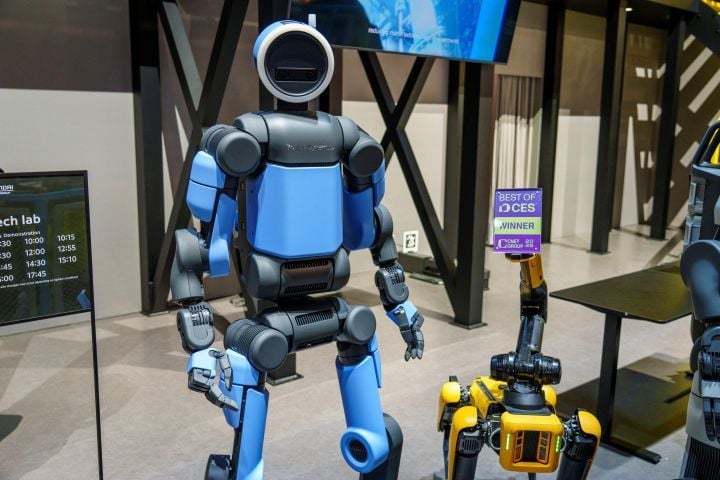
Hyundai Motor Group affiliate Boston Dynamics’ Atlas won CNET Group’s Best Robot award as part of the Best of CES 2026 honors.
Credit: Hyundai
Autonomous drones, tractors, skid steers, vineyard equipment, and of course cars were all featured at CES. Oh, and humanoid robots. How could I forget about Hyundai’s robots, which will increasingly fill its state-of-the-art production facilities in South Korea and the U.S. over the next 10 years? More on that another time.
One clear takeaway was that autonomous vehicles will become commonplace in all automotive segments. The technology is here. There are, of course, issues to be worked out with regulation, insurance and implementation, but we now have countless examples that, with time, any of those hurdles can be overcome. At the consumer level, it seems inevitable that autonomous vehicles will eventually become the majority on the road.
Warren Buffett famously said that time is more valuable than money. Our time is our most valuable commodity, and as safety concerns subside, it is easy to see a future when, given the opportunity, most people will decide to gain back their time in the vehicle by purchasing an autonomous one. Nvidia and xAI are certainly betting on the proliferation of the autonomous vehicle market, as was evident in Nvidia CEO Jensen Huang’s keynote the first day at CES.
This may provide a lifeline for the EV market in the U.S. It’s no secret that EV demand has taken a major hit with the removal of the federal EV tax credit. Understand that while EVs are not essential for autonomous driving, they are a better platform than traditional ICE vehicles. It is, in fact, software-defined vehicles that enable autonomous driving, and EVs are undisputably the preferred platform for SDVs. With that, I predict that consumer demand for autonomous driving will spark EV penetration in the U.S.
The In-Vehicle Entertainment Experience
Autonomous driving will dramatically change what consumers look for in their in-vehicle experiences. Large panoramic displays and 28-speaker sound systems could be found all over the exhibit hall at CES. The Sony-Honda Afeela joint venture is betting on in-cabin entertainment being a major differentiator as driving takes a backseat (pun intended) to riding. It seems reasonable that, in the current attention economy, the car will be the next battleground.
As OEMs fight for that attention, the winners won’t have just the biggest screens – they’ll have the best content, the smoothest user experience, and the strongest partnerships with streaming, gaming, and app ecosystems. In many ways, the competition is shifting from horsepower and handling to software, subscriptions, and the quality of the time spent inside the cabin.
The Big Take-Away
This year’s CES once again drove home what the future of automotive could look like: a rapid evolution from basic transportation to a magic carpet that frees up commuting time for entertainment or heightened productivity. From what I saw in Las Vegas, that future looks bright – and closer than we realize.
About the Author: Tyler Raquet is a tech-futurist and president of Mosaic Compliance Services. This article was authored and edited following Auto Dealer Today editorial standards and style. Opinions expressed may not reflect those of the publication.