

How Defection Data is Bridging the Dealership Conversion Gap
Brand loyalty is a relic. Today, the typical auto buyer considers two to three brands and visits multiple competing stores before signing. According to the 2026 Urban Science Harris Poll Study*, compared to last year 44% of buyers spend more time researching online before contacting a dealer, and 31% are more focused on price and value over brand affinity.
This habit shift has created a sharp confidence gap. 72% of dealers say their sales process effectively converts leads. In the same breath, 67% admit closing a deal is harder today than a year ago.
The Invisible Problem
Dealers are losing leads without knowing when or why. Standard CRM platforms log activity, but not defection, resulting in bloated pipelines, wasted follow-up cycles and missed opportunities to learn from their lost leads.
- 51% of auto buyers now submit an online quote to a dealer, up six percentage points from 2025.
- Of every three leads, only one buys from the store contacted. The other two in the pipeline end up with the competition.
- On average, 20% of CRM leads defect to another store.
If your dealership absorbs 200 silent exits a month, your sales team is burning roughly 100 hours chasing buyers who already drove off another lot.
Daily industry sales and defection data improves visibility. The next morning, dealers can see when a same-brand or competitive store captured a sale from one of their leads. They also see which segment they purchased, PMA alignment, customer demographics and store loyalty status to gain a more complete picture.
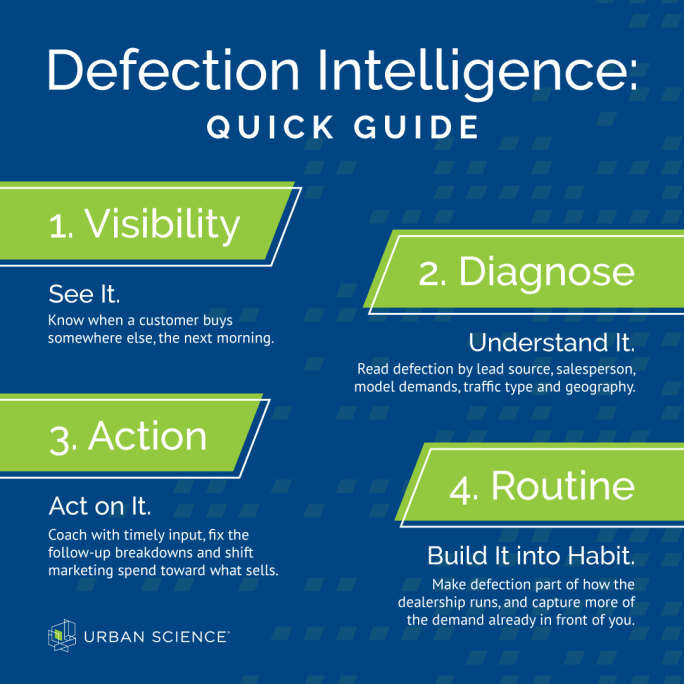
Urban Science
The Conversion Gap: Where Ground is Gained or Lost
Most dealers assume price drives defection. Urban Science’s piloted Defection Survey, deployed directly to lost buyers, says otherwise. Communication ranks as the number one friction point, ahead of price, non-specific issues and staff behavior.
When the market tightens, dealers often reach for new tools, when the real fix is usually stronger training and communication discipline. So, the opportunity is threefold: strengthen communication workflows, leverage real-time insights to coach your staff and pinpoint where leads drop off in the buying journey—then automate targeted follow-up at those moments. This adds a layer of insurance that can help recover opportunities before they’re lost.
Diagnosing the Root Causes and Acting on Them
Dealers too often focus on their close rate, but that only covers the narrow funnel of leads in their pipeline, versus the actual opportunity available in their market. Daily defection data helps dealers separate two problems they currently treat as one: conversion breakdowns and marketing performance.
Conversion Breakdowns
When the lead buys from a same-brand store down the road, the showroom owns the loss. Days-to-sale gaps expose where follow-up breaks down. Salesperson performance data, sliced by traffic type, tells coaches where to focus. Daily defection data lets dealers understand the real market demand, and their capture rate within it, so they can make smarter sales and marketing decisions.
Marketing Performance
When the lead never buys from anyone, marketing owns the loss. A low buy rate means marketing efforts are generating low-intent traffic, which calls into question your channel or message strategy. Inventory defection data highlights pricing and prioritization gaps on specific makes and models, helping dealers adjust pricing or increase promotion where it matters most.
Before buying another lead, do two things:
- Fix the conversion process.A leaky funnel does not need more water.
- Reallocate spend away from high defection lead sources and geographies.
Make reviewing defection data a daily, weekly and monthly habit. Acting on defection insights reaches a tipping point when it moves from a quarterly post-mortem to a core operating discipline targeted at improving conversion performance.
Closing the Gap
Defection intelligence gives dealers a way to zero in on dealership operations using clear, actionable data.
- Sales teams stop chasing out-of-market leads and prioritize the buyers still in play.
- Managers train against verified outcomes instead of assumptions.
- Marketing tunes spend against actual buy rates.
- Fixed Ops gets a second swing through service or retention strategies.
Dealers who build daily defection data into their standard routines achieve an average 6.5% lift in total sales over six months; the equivalent to roughly 25 additional vehicle deliveries. The lift comes from converting more of the demand already in the system, with no extra leads required.
*Source: Urban Science Online Auto-Buyer and Dealer Studies, January 2026. These surveys were conducted by The Harris Poll on behalf of Urban Science among 3,012 U.S. adults aged 18+ who currently own or lease or plan to purchase or lease a new or used vehicle in the next 12 months and 252 U.S. OEM automotive dealers, whose titles were Sales Manager, General Manager, or Principal/VP/Owner.